Cold Weather Checklist for Southern New Hampshire
How to Prevent No-Heat Calls and Frozen Pipes
When temperatures drop fast in New Hampshire, heating systems run longer, fuel deliveries get tighter, and small issues can turn into emergencies quickly. The good news is that many no-heat calls and frozen pipe situations are preventable with a few simple steps.
Use the checklist below to help your home stay warm, safe, and protected during cold snaps.
1) Keep your primary heat running
Even if you prefer a pellet stove, wood stove, or mini splits, your boiler or furnace plays a major role in protecting the home. When the primary system is turned off, pipes in basements, crawlspaces, exterior walls, garages, and unused rooms can freeze sooner than you expect.
- Keep the thermostat set to a steady temperature, especially overnight.
- Avoid large temperature setbacks during extreme cold.
2) If you are away, do not turn the heat too far down
Lowering the thermostat significantly during extreme cold can increase the risk of frozen pipes and make your system work harder when you return.
- Set your home to at least 60°F.
- Leave interior doors open to improve circulation to colder rooms.
- If your home has known cold spots, consider a slightly higher setpoint during the coldest nights.
3) Prevent frozen pipes before they start
Most frozen pipe problems begin in areas with low airflow and plumbing located on exterior walls.
- Open cabinet doors under sinks on exterior walls during the coldest nights.
- If you have had freezing in the past, allow faucets to drip slightly overnight.
- Keep garage doors closed if plumbing or heating equipment is located in the garage.
Watch for warning signs:
- Little to no water flow from a faucet
- Frost on exposed piping
- A room that is noticeably colder than the rest of the home
4) Check the air filter and airflow
A clogged air filter can restrict airflow and cause your system to struggle when it is working hardest. This is one of the most common and easiest issues to prevent.
- Replace the filter if you cannot remember the last time it was changed.
- Confirm supply and return vents are not blocked by furniture, rugs, or curtains.
5) Boilers and hydronic heat: keep heat moving through the home
Homes with baseboard, radiators, or other hydronic systems rely on steady circulation to keep the entire structure protected.
- Keep interior doors open, especially to rooms over garages, near exterior corners, and in finished basements.
- If one room runs colder, increase circulation and slightly raise the thermostat during the coldest stretch.
6) High-efficiency equipment: keep intake and exhaust vents clear
Many high-efficiency systems use PVC venting that exits through the side of the home. Snow banks and drifting can block these vents and contribute to performance or safety issues.
- After storms, confirm both the intake and exhaust are clear of snow and ice.
- Keep the area around vents open, especially during prolonged cold.
Call if you notice:
- Repeated shutdowns
- Error codes
- Heavy frost buildup that quickly returns after clearing
7) Heat pumps and mini splits: keep outdoor units clear and let them defrost
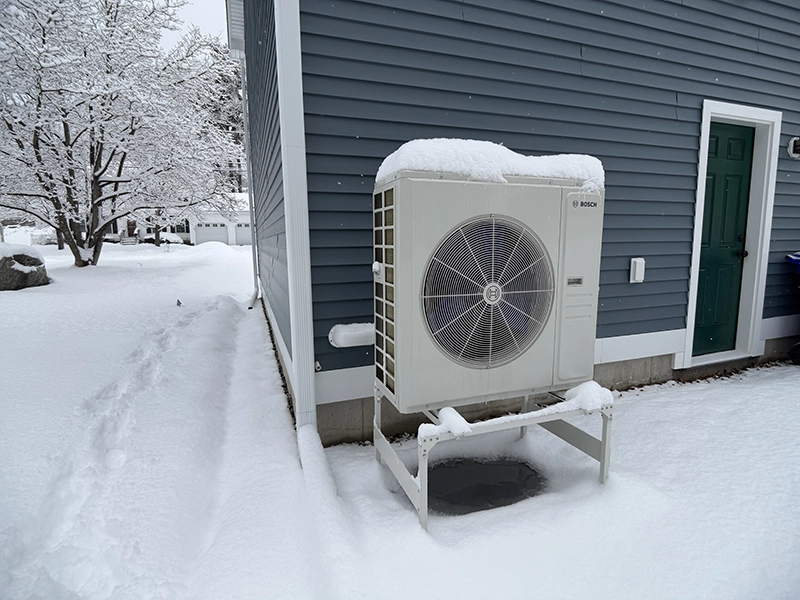
Cold-climate heat pumps are designed to run in winter conditions, including periodic defrost cycles. Outdoor units need breathing room to operate properly.
- Keep 18 to 24 inches of clearance around outdoor units.
- Clear snow gently and avoid hitting fins or coils.
- Do not chip ice with sharp tools. Allow the system to run its defrost cycle.
Call if you notice:
- The unit is buried or repeatedly icing over
- Unusual noises
- Reduced heating performance over several hours
8) Fuel supply: avoid running low during peak demand
During cold snaps, demand increases and deliveries can get tight. Running low can create an avoidable emergency.
- Keep oil and propane tanks above one-quarter full during extended cold.
- Make sure propane regulators and meters are not buried in snow.
When to call before it becomes an emergency
If you notice any of the following, it is worth calling early:
- Unusual noises
- Short cycling (turning on and off frequently)
- Cooler air than normal from vents
- Certain rooms falling behind
- Loss of heat in a zone or section of the home
Need help? We are here.
If you have concerns about your system performance, venting, or cold-weather preparedness, contact A.J. LeBlanc Heating. For 24/7 emergency service, call 603-623-0412. Serving New Hampshire families since 1928.
Frequently Asked Questions
What is the lowest safe thermostat setting in NH winter?
60°F. Below that, the risk of frozen pipes and the cost of recovering an iced-out heating system outweigh the savings.
Should I keep my boiler running if I have a pellet stove?
Yes. The boiler protects pipes throughout the home, including areas the pellet stove cannot heat directly (basements, exterior walls, rooms over garages). Keep the central system on even when the stove is running.
How much clearance does my outdoor heat pump need in winter?
18 to 24 inches on all sides. Clear snow gently after storms; do not chip ice with sharp tools.
How often should I check my air filter?
Monthly during the heating season. Replace 1-inch filters every three months at minimum; media filters last six to twelve months.
What should I do if my heat goes out at night?
Call our 24/7 emergency line at 603-623-0412. In the meantime, run faucets on exterior-wall fixtures at a slow trickle to reduce frozen pipe risk, and keep interior doors open to circulate any remaining warm air.