Heat Pump Not Working? Check for Snow Buildup
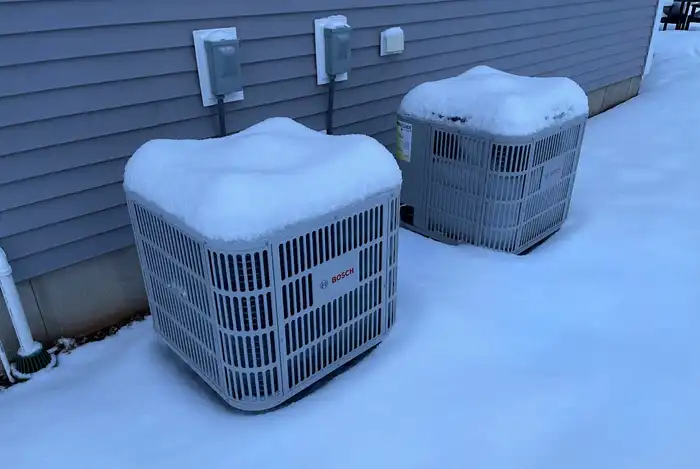
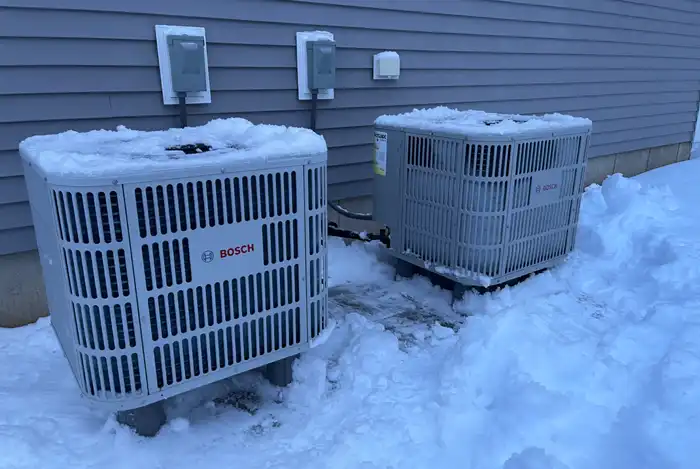
While heat pumps are designed to run all year round, performance can degrade quickly when snow piles up on or around the outdoor unit. If your heat pump is not generating heat properly after a storm, the first thing to check is whether snow has accumulated on top of or against the unit.
Typically a heat pump clears itself through its defrost cycle: the outdoor unit briefly reverses to thaw frost off the coil. But defrost cannot clear heavy snow piled on top of the unit, especially if the system was not running during the storm. A quick visual check is often all it takes to get the system back to normal.
What NOT to do
- Do not use a shovel or any hard tool to clear snow off the unit. The aluminum fins on the coil bend easily and the damage shows up later as reduced cooling and heating capacity.
- Do not chip at ice with sharp tools. Let the system run its defrost cycle, or thaw it gently with warm (not hot) water if needed.
- Do not scrape or push against the sides of the unit. The condenser coil wraps around the unit; pushing against it damages the fins.
- Do not cover the heat pump with a tarp or housing for the winter unless the covering has at least 5 feet of clearance above the unit and is open on all sides. Covers that restrict airflow can cause the system to overheat in heating mode and ice over in cooling.
- Do not power-wash the unit. Pressure damages fins.
How to properly clear snow from your heat pump
- Shut off the heat pump at the thermostat (Heat mode to Off) or at the outdoor disconnect.
- Brush snow off the top gently with a soft snow brush or broom.
- Carefully shovel snow on the ground away from the unit, but do not strike the sides with the shovel. Keep 18 to 24 inches of clearance on all sides.
- If ice has formed on the coil, do not chip it off. Let the system run its defrost cycle once you turn it back on, or thaw with warm (not boiling) water.
- Turn the system back on and listen for normal operation. The first cycle after clearing may trigger an extended defrost; that is normal.
Preventing the problem next time
- Keep the system running during the storm. A heat pump that is actively running will clear itself through defrost cycles. A heat pump that was off during a heavy storm will not.
- Mount the outdoor unit on a snow stand or wall bracket in areas that get heavy snowfall. This raises the unit above ground level and reduces the amount of snow that can accumulate beneath it.
- Clear drifts and shoveled piles away from the unit after each storm. Drifting snow against the side fins is just as damaging to capacity as snow on top.
- Keep meltwater drainage clear. The unit drips condensation and defrost water; if that drainage path freezes solid, ice builds back up under the unit.
When to call
If the unit is buried, repeatedly icing over right after you clear it, or making unusual noises during operation, the issue is likely beyond snow accumulation. Possible causes include a stuck reversing valve, a failed defrost board, or low refrigerant. Contact A.J. LeBlanc Heating. For 24/7 emergency service, call 603-623-0412. Serving New Hampshire families since 1928.
Frequently Asked Questions
Why does my heat pump stop working when it snows?
Most commonly because snow has accumulated on top of or against the outdoor unit, restricting airflow across the coil. Defrost cycles cannot clear heavy snow buildup, especially if the system was not running during the storm.
Should I cover my heat pump in winter?
Generally no. Covers that restrict airflow cause the system to overheat in heating mode and prevent defrost from working. If you must cover the unit, use a cover with at least 5 feet of clearance above the unit, open on all sides.
How much clearance does my heat pump need from snow?
18 to 24 inches on all sides. Snow piled against the sides restricts airflow the same way snow on top does.
Can I use a heater or hot water to thaw an iced-up heat pump?
Warm (not boiling) water poured over the coil can speed up thawing if needed. Do not use a torch, hair dryer pressed against the coil, or any direct heat source. Letting the system run its own defrost cycle is the safest method.
Why is the outdoor unit dripping water in winter?
Normal. The unit produces condensation and defrost meltwater during operation. Make sure the meltwater can drain away from the unit so it does not pool and refreeze underneath.